 EN
EN


Across industries as different as food service, beauty retail, and general merchandising, acrylic trays have become one of the most versatile display and organization tools available. Their clarity, durability, and adaptability make them a practical choice for businesses that need to present products cleanly and professionally without investing in expensive custom fixtures. Whether the goal is to showcase pastries in a café, organize lipsticks on a vanity counter, or arrange merchandise on a retail shelf, acrylic trays can be engineered to meet the specific demands of each environment.
The question of how acrylic trays are adapted for these three distinct sectors is not simply about aesthetics. It involves material selection, structural design, hygiene compliance, and the practical logic of how customers interact with displayed products. Each application context places different demands on the tray, and understanding those differences helps buyers, designers, and merchandisers make smarter sourcing decisions. This article explores the specific adaptations that make acrylic trays effective across food, cosmetic, and retail display environments.
The Core Properties That Make Acrylic Trays Adaptable
Optical Clarity and Product Visibility
One of the primary reasons acrylic trays are chosen across so many industries is their exceptional optical clarity. Unlike metal or wood display solutions, acrylic allows the product itself to remain the visual focus. Light passes through the material cleanly, which means items placed inside or on top of acrylic trays appear vivid and well-lit even under standard store or kitchen lighting.
This transparency is not merely decorative. In food display contexts, customers need to see exactly what they are selecting. In cosmetic retail, shoppers want to evaluate color, packaging, and product form before picking up an item. In general retail, clear visibility reduces the need for excessive signage and lets the product communicate its own value. Acrylic trays deliver this visibility consistently across all three contexts.
The material also resists yellowing over time when manufactured to a high standard, which means the clarity that makes acrylic trays effective on day one is largely preserved through months of regular use. This longevity is a meaningful advantage for businesses that rotate displays infrequently or operate in high-traffic environments.
Structural Flexibility and Customization Range
Acrylic trays can be fabricated in an enormous range of shapes, depths, compartment configurations, and surface finishes. This structural flexibility is what allows the same base material to serve a bakery counter, a cosmetics gondola, and a hardware store shelf simultaneously. Fabricators can cut, bend, bond, and polish acrylic sheet into virtually any tray geometry required by a specific application.
Compartmentalization is one of the most commonly requested adaptations. A food service tray might be divided into sections that keep different items separated and hygienic. A cosmetic acrylic tray might include narrow slots sized precisely for lipstick tubes or wider bays for compact palettes. A retail display tray might be designed as a flat, open platform that allows products of varying sizes to be arranged freely by staff.
The ability to specify wall height, base thickness, and edge finishing also matters. Taller walls prevent items from sliding off during customer browsing. Thicker bases provide stability for heavier products. Polished edges give a premium appearance that aligns with luxury brand environments. These are not afterthoughts — they are deliberate design choices that reflect the specific demands of each industry.
How Acrylic Trays Are Adapted for Food Display
Hygiene and Food-Safe Material Standards
When acrylic trays are used in food environments, the first adaptation concern is hygiene. Food-grade acrylic formulations are non-porous, which means bacteria and moisture cannot penetrate the surface the way they can with wood or certain plastics. This makes acrylic trays significantly easier to sanitize between uses, which is a regulatory and practical requirement in commercial food settings.
The smooth, seamless interior surfaces of well-made acrylic trays eliminate the crevices where food particles and contaminants tend to accumulate. In bakery displays, deli counters, and catering setups, this matters enormously. Staff can wipe down acrylic trays quickly and thoroughly without the risk of residue buildup that would compromise food safety standards.
It is worth noting that not all acrylic products are automatically food-safe. Buyers sourcing acrylic trays for food applications should confirm that the material meets relevant food contact standards in their region. Reputable fabricators will specify the grade of acrylic used and whether it is appropriate for direct or indirect food contact.
Design Features Specific to Food Service Contexts
Beyond material compliance, acrylic trays used in food display are often adapted with specific structural features. Raised edges or lips prevent items from rolling or sliding, which is particularly important for round pastries, fruit, or individually wrapped products. Some food display acrylic trays incorporate a slight forward tilt to improve customer visibility and encourage product selection.
Stackability is another common adaptation for food service environments. When a display needs to be restocked or cleared at the end of service, acrylic trays that nest cleanly into one another save storage space and reduce handling time. This practical consideration is often overlooked in the design phase but becomes highly relevant in busy commercial kitchens and service counters.
Color options also play a role. While clear acrylic trays are the default choice for most food displays because they maximize product visibility, frosted or lightly tinted acrylic trays are sometimes used to create a specific aesthetic in upscale food retail or hospitality environments. The key is that the adaptation serves both the visual goal and the operational requirement of the setting.
How Acrylic Trays Are Adapted for Cosmetic Displays
Precision Compartments for Product Categories
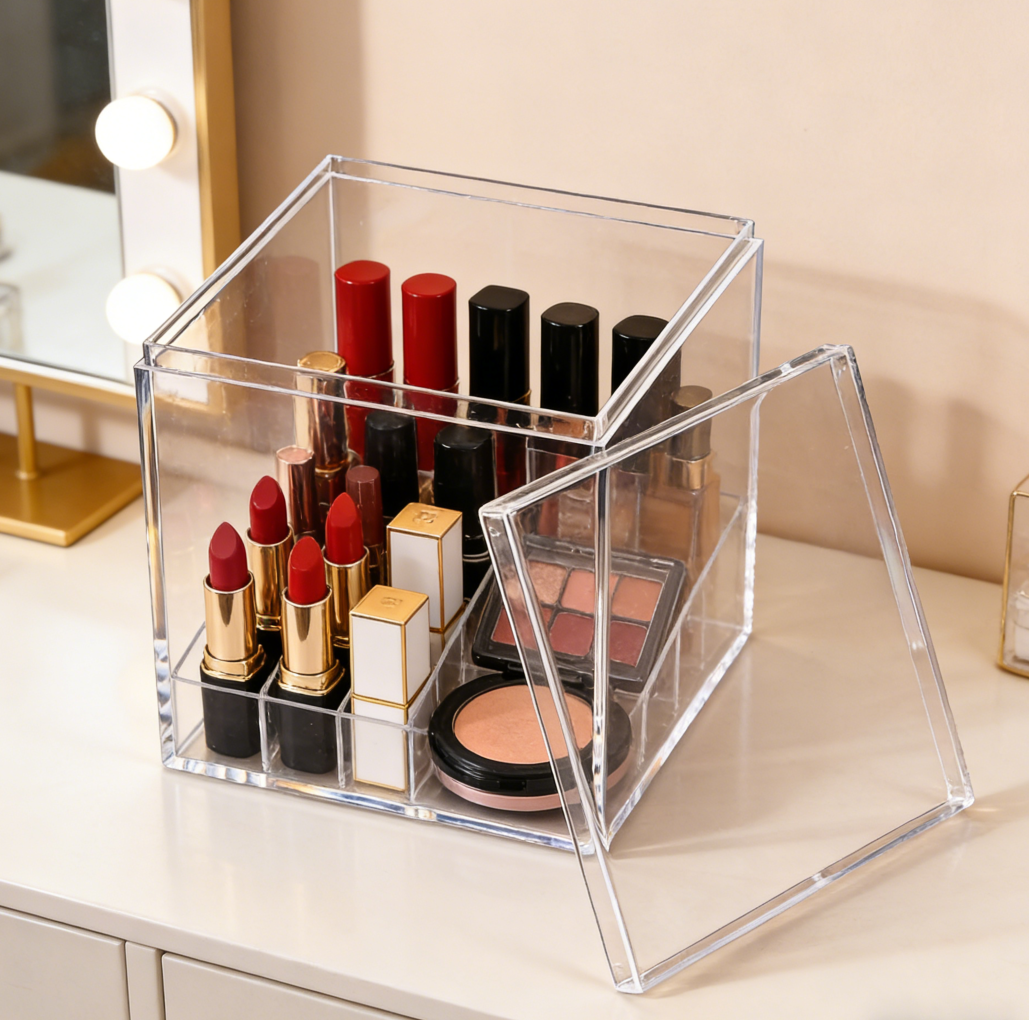
The cosmetic industry places some of the most exacting demands on acrylic trays because the products being displayed vary so widely in size, shape, and weight. Lipsticks, mascaras, eyeshadow palettes, foundation bottles, and skincare jars all have different dimensional requirements. Acrylic trays used in cosmetic retail and personal organization are therefore frequently designed with precision-sized compartments that hold each product category securely and upright.
Narrow cylindrical slots are a standard adaptation for lip products and mascara wands. Wider, shallower bays accommodate compact cases and palettes. Deeper sections with padded or fitted bases are used for fragile glass bottles. These compartment designs are not arbitrary — they reflect a detailed understanding of how cosmetic products are packaged and how consumers interact with them during selection or daily use.
In professional makeup artist kits and salon environments, acrylic trays are often designed to be modular, allowing individual sections to be rearranged or replaced as product inventories change. This modularity extends the useful life of the tray system and reduces the need to replace the entire unit when a product line is updated.
Aesthetic Alignment with Beauty Brand Standards
Cosmetic brands invest heavily in visual identity, and the display fixtures they use must align with that identity. Acrylic trays are well-suited to this requirement because they can be finished in ways that complement a wide range of brand aesthetics. High-gloss polished acrylic trays convey luxury and precision. Matte or frosted finishes suggest a more understated, clinical elegance. Rose-tinted or black acrylic trays can be used to reinforce specific brand color palettes.
The transparency of standard clear acrylic trays also serves a specific function in cosmetic retail: it allows the product packaging to speak for itself. When a brand has invested in distinctive packaging design, placing those products in a clear acrylic tray ensures that the packaging remains the visual centerpiece rather than being overshadowed by the display fixture itself.
Lids are another adaptation commonly seen in cosmetic acrylic trays. A fitted lid keeps products dust-free in storage or during transport, which is particularly relevant for professional kits and retail stockrooms. The combination of a clear base tray and a clear lid creates a fully enclosed display unit that protects products while maintaining complete visibility — a balance that is difficult to achieve with other materials.
How Acrylic Trays Are Adapted for Retail Displays
Versatility Across Product Categories
General retail environments present the broadest range of display challenges, and acrylic trays have proven adaptable to nearly all of them. From electronics accessories to stationery, from health supplements to hardware components, acrylic trays provide a clean, neutral platform that does not compete visually with the products being sold. This neutrality is a significant advantage in multi-brand retail environments where consistency of fixture appearance matters.
Retail acrylic trays are often designed with a lower profile than their food or cosmetic counterparts, allowing them to sit flat on shelves without obstructing sightlines to products on higher or lower levels. Some configurations include a slight incline so that products face the customer at a more readable angle, which is particularly useful for packaged goods where the front label carries the primary sales message.
The durability of acrylic trays in high-traffic retail settings is also a key adaptation consideration. Retail fixtures are handled frequently by both staff and customers, and they need to withstand repeated contact without cracking, scratching excessively, or losing their appearance. Quality acrylic trays manufactured from cast or extruded sheet of appropriate thickness maintain their structural integrity and visual appeal through extended use cycles.
Integration with Retail Fixture Systems
In organized retail environments, acrylic trays rarely function as standalone items. They are typically integrated into broader fixture systems that include shelving units, pegboards, gondolas, and countertop displays. Adaptations for this context include standardized dimensions that align with common shelf depths, mounting slots or tabs that allow trays to be secured to fixture rails, and modular sizing that allows multiple trays to be arranged side by side without gaps.
Signage integration is another retail-specific adaptation. Some acrylic trays are designed with a front rail or header slot that accepts a printed price card or product label. This keeps pricing information directly associated with the product display without requiring separate label holders, which simplifies the visual layout of the shelf and reduces the number of individual fixture components that staff need to manage.
Retailers operating in premium or specialty segments often specify acrylic trays with custom branding elements such as laser-engraved logos or color-matched tinting. These adaptations reinforce brand identity at the point of sale and create a more cohesive shopping environment. The ability to incorporate branding directly into the tray material — rather than applying it as a sticker or label — gives acrylic trays a distinct advantage over generic plastic alternatives.
Selecting the Right Acrylic Tray Adaptation for Your Application
Matching Tray Specifications to Operational Requirements
Choosing the right acrylic trays for a specific application requires a clear understanding of the operational environment. Temperature exposure, cleaning frequency, product weight, and customer interaction patterns all influence which specifications are appropriate. A food service environment that requires daily sanitization with commercial cleaning agents needs acrylic trays made from a grade that resists chemical degradation. A cosmetic display in a climate-controlled retail space has different material requirements than an outdoor market stall.
Thickness is a specification that is often underestimated. Thinner acrylic trays are lighter and less expensive, but they flex under load and may crack if dropped or subjected to point pressure. For applications where trays will be handled frequently or loaded with heavier products, a thicker base and wall construction provides the necessary rigidity. Fabricators with experience in specific industry applications can advise on appropriate thickness ranges based on intended use.
It is also worth considering the full lifecycle of the tray. Acrylic trays that are well-specified for their application will last significantly longer than those chosen purely on initial cost. The total cost of ownership — including replacement frequency, cleaning time, and the impact of display quality on customer perception — often justifies investing in higher-specification acrylic trays from the outset.
Working with Fabricators to Achieve the Right Adaptation
The most effective acrylic trays for specialized applications are typically produced through a collaborative process between the buyer and the fabricator. Providing detailed information about the products to be displayed, the physical environment, the cleaning protocols, and the aesthetic requirements allows fabricators to recommend the most appropriate material grade, construction method, and finishing options.
Prototyping is a valuable step in this process, particularly for custom compartment configurations or unusual dimensions. A physical prototype allows buyers to verify that the tray functions as intended before committing to a full production run. This is especially important in cosmetic and food applications where precise fit and hygiene performance are non-negotiable.
Buyers should also clarify lead times, minimum order quantities, and quality control processes when sourcing acrylic trays for commercial applications. Consistency across a batch is important when trays will be used together in a unified display system. Variations in clarity, dimension, or finish quality can undermine the professional appearance that acrylic trays are chosen to create.
FAQ
Are acrylic trays safe for direct food contact?
Acrylic trays can be food-safe when manufactured from the appropriate food-grade material formulation. Not all acrylic products automatically meet food contact standards, so buyers should confirm compliance with relevant regulations in their region before using acrylic trays for direct food contact applications. Reputable fabricators will be able to provide material specifications and compliance documentation on request.
How do acrylic trays compare to glass trays for cosmetic displays?
Acrylic trays offer several practical advantages over glass in cosmetic display contexts. They are significantly lighter, which makes them easier to handle and reposition. They are also far less likely to shatter if dropped, which is an important safety consideration in retail and professional environments. While glass has a premium tactile quality, high-quality acrylic trays with polished edges and surfaces can achieve a comparable visual appearance at lower weight and risk.
Can acrylic trays be used in outdoor retail displays?
Standard acrylic trays can be used in outdoor settings for short periods, but prolonged UV exposure can cause yellowing and surface degradation over time. For outdoor retail applications, UV-stabilized acrylic formulations are available that resist this degradation more effectively. Buyers planning to use acrylic trays in outdoor or high-UV environments should specify UV-resistant material grades when sourcing.
What is the best way to clean acrylic trays without scratching them?
Acrylic trays should be cleaned with a soft, non-abrasive cloth and a mild soap solution or a cleaner specifically formulated for acrylic surfaces. Avoid using paper towels, abrasive sponges, or solvent-based cleaners, as these can scratch or cloud the surface. For food service acrylic trays that require sanitization, confirm with the fabricator that the sanitizing agent is compatible with the specific acrylic grade used in the tray.