 EN
EN

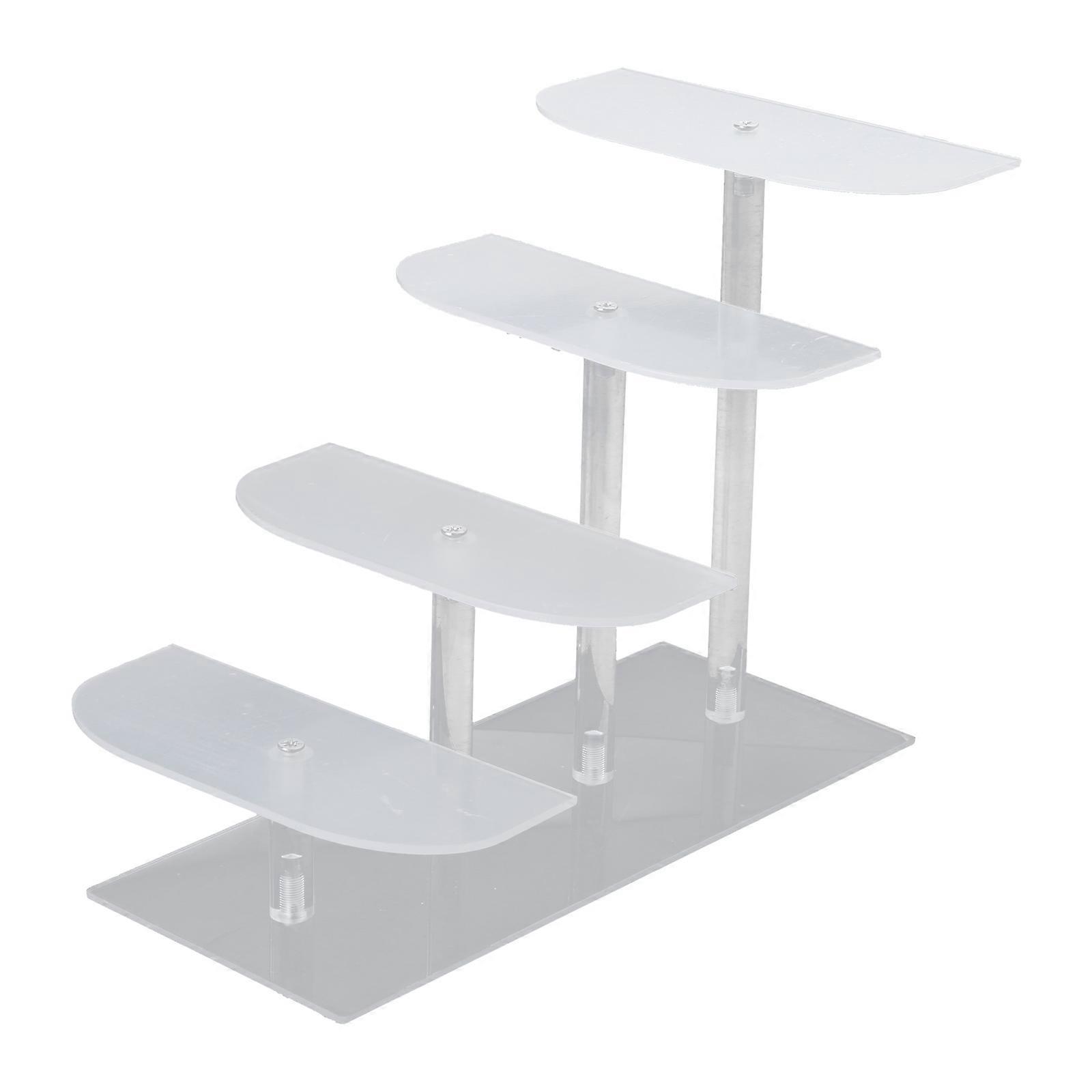
Customizing an acrylic jewelry stand requires a strategic approach that balances aesthetic appeal, functional performance, and brand identity. Retailers, jewelry designers, and display specialists face the challenge of creating presentation solutions that not only showcase products effectively but also enhance the overall customer experience. The design process for an acrylic jewelry stand involves multiple interconnected considerations, from material selection and structural integrity to visual hierarchy and spatial efficiency. Understanding these design factors ensures that your custom display solution serves its intended purpose while maintaining durability, clarity, and professional appearance across diverse retail environments.
The customization process demands careful evaluation of how design choices impact product visibility, customer interaction, and long-term operational efficiency. Whether you're designing an acrylic jewelry stand for high-end boutiques, trade show exhibitions, or everyday retail settings, each design element must align with your specific merchandising objectives and spatial constraints. From thickness specifications and edge finishing to mounting mechanisms and modular capabilities, every detail influences how effectively the stand communicates value and facilitates purchase decisions. This comprehensive exploration examines the critical design considerations that separate exceptional custom acrylic jewelry stands from generic display solutions.
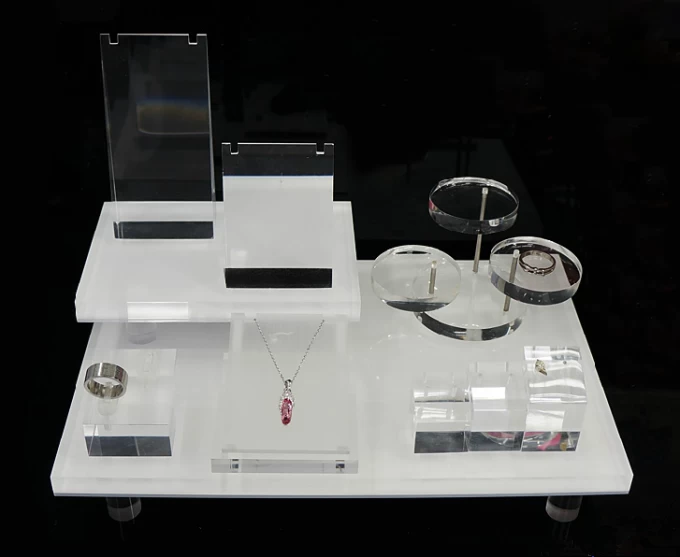
Material Quality and Optical Clarity Standards
Acrylic Grade Selection for Jewelry Display Applications
The foundation of any effective acrylic jewelry stand begins with selecting the appropriate acrylic grade, as material quality directly impacts optical clarity, scratch resistance, and overall longevity. Cast acrylic typically provides superior clarity compared to extruded acrylic, making it the preferred choice for high-end jewelry presentations where transparency and light transmission are paramount. Cast acrylic offers better dimensional stability, reduced internal stress, and enhanced polishing capabilities, which become critical when creating custom shapes or incorporating intricate design features into your display solution.
When specifying material for an acrylic jewelry stand, consider the optical transmission rate, which should ideally exceed 92% to ensure jewelry pieces appear vibrant and true to their actual colors. Lower-grade acrylics may contain impurities or inconsistencies that create visual distortions, particularly problematic when displaying gemstones, precious metals, or items with intricate detail. The material's UV resistance properties also warrant attention, especially for displays positioned near windows or under strong lighting conditions, as prolonged exposure can cause yellowing or degradation that diminishes the professional appearance of your presentation.
Thickness Specifications and Structural Requirements
Determining the optimal thickness for your acrylic jewelry stand involves balancing structural integrity with aesthetic preferences and weight considerations. Standard thicknesses range from 3mm for lightweight applications to 12mm or more for substantial pieces requiring enhanced stability. Thinner materials reduce overall weight and material costs but may compromise durability and create flexing issues, particularly in larger display formats or when supporting heavier jewelry collections. Conversely, excessive thickness can appear visually heavy and reduce the sense of elegance that acrylic naturally provides.
The relationship between thickness and design complexity requires careful evaluation during the customization process. Intricate shapes, cantilevered sections, or stands with minimal base contact areas typically demand thicker materials to prevent warping or breakage during normal use. An acrylic jewelry stand designed for rotating displays or interactive customer engagement must incorporate additional thickness to withstand repeated handling without developing stress fractures or surface damage. Consider the jewelry weight capacity requirements and factor in appropriate safety margins to ensure long-term reliability across various retail conditions.
Functional Design Elements and Ergonomic Considerations
Display Angle and Viewing Optimization
The angle at which jewelry is presented significantly influences customer perception and purchase decisions, making viewing optimization a critical design consideration for any acrylic jewelry stand. Ideal display angles typically range between 15 and 45 degrees from vertical, depending on the jewelry type and the typical customer viewing position. Necklaces and pendants generally benefit from near-vertical presentations that allow chains to drape naturally, while rings and earrings often require steeper angles that showcase design details and facilitate close examination without requiring customers to bend or adjust their viewing position.
Customizing an acrylic jewelry stand with adjustable angle capabilities provides versatility for merchandising different product categories within the same display system. Multi-tiered stands must account for sight lines that prevent upper levels from obscuring lower items, requiring careful calculation of tier spacing and angle relationships. The reflection properties of acrylic can either enhance or detract from visibility depending on angle selection, as certain configurations may create unwanted glare under retail lighting conditions. Testing viewing angles under actual lighting environments before finalizing your design ensures optimal visual presentation across the full range of customer heights and approach angles.
Accessibility and Customer Interaction Features
Designing an acrylic jewelry stand that facilitates easy customer interaction without compromising security requires thoughtful consideration of accessibility features. The height and reach distance to jewelry items should accommodate the average customer without requiring excessive bending or stretching, typically positioning featured pieces between 900mm and 1400mm from floor level for optimal engagement. Open designs that allow unobstructed access encourage hands-on interaction, which research consistently shows increases purchase likelihood, yet must balance this openness with theft deterrence considerations appropriate to your retail environment.
Incorporating tactile elements into your acrylic jewelry stand design can enhance the customer experience while maintaining the clean aesthetic acrylic provides. Beveled edges, rounded corners, and smooth transitions between surfaces prevent sharp contact points that might create negative tactile impressions or safety concerns. For high-value items, consider designing removable acrylic covers or integrated locking mechanisms that preserve visibility while providing security during unattended periods. The interaction design should also account for sales staff workflow, ensuring representatives can efficiently access inventory for customer try-ons without disrupting the overall display arrangement or requiring excessive handling of the stand structure itself.
Aesthetic Integration and Brand Alignment
Visual Hierarchy and Focal Point Creation
Establishing clear visual hierarchy within an acrylic jewelry stand design guides customer attention toward featured items and creates an organized browsing experience. The transparent nature of acrylic provides unique opportunities to layer visual elements and create depth perception that draws the eye through the display. Primary focal points should occupy positions that align with natural eye movement patterns, typically the upper-right quadrant for left-to-right reading cultures, with supporting items arranged in descending order of importance or value.
When customizing an acrylic jewelry stand, consider how varying heights, platform sizes, and spatial relationships between display surfaces create implicit hierarchy. Larger platforms or elevated positions naturally signal greater importance, while clustering techniques can group related items without requiring physical dividers that might obstruct sightlines. The interplay between positive space (where jewelry sits) and negative space (empty areas) significantly impacts visual impact, with well-balanced designs preventing cluttered appearances that overwhelm customers. Strategic use of acrylic thickness variations can create subtle visual boundaries that organize product categories without introducing opaque elements that compromise the material's inherent transparency.
Color Integration and Surface Treatment Options
While clear acrylic remains the most popular choice for jewelry displays, incorporating selective color elements or surface treatments can strengthen brand identity and create distinctive visual signatures. Colored acrylic backgrounds, edge lighting with LED strips, or UV-printed graphics on rear surfaces can transform a standard acrylic jewelry stand into a branded marketing tool that reinforces your visual identity. These enhancements must be carefully balanced to ensure they complement rather than compete with the jewelry being displayed, maintaining focus on products rather than the display mechanism itself.
Surface finishing options for an acrylic jewelry stand extend beyond simple polishing to include frosted sections, textured areas, or selective transparency that guides visual attention. Frosted acrylic bases can provide subtle contrast that makes jewelry pieces appear to float, while maintaining the overall clean aesthetic acrylic offers. Edge polishing quality significantly impacts perceived value, with flame-polished or diamond-polished edges creating glass-like clarity that signals premium quality. When integrating branding elements, consider techniques like laser engraving or reverse printing that preserve the smooth surface customers will touch while adding visual interest from specific viewing angles.
Practical Manufacturing and Maintenance Factors
Fabrication Method Selection and Design Limitations
The manufacturing method chosen for your acrylic jewelry stand directly impacts design possibilities, cost efficiency, and production timelines. Laser cutting offers precision for intricate shapes and enables rapid prototyping but may leave slight discoloration on cut edges that requires secondary polishing. CNC routing provides clean edges suitable for thicker materials and complex three-dimensional forms, though setup costs make it more economical for larger production runs. Thermoforming allows for curved surfaces and organic shapes impossible with flat fabrication methods but requires mold creation that increases initial investment while reducing per-unit costs for volume orders.
Understanding manufacturing constraints helps create realistic designs that balance aesthetic ambitions with production practicality. Sharp internal corners, for instance, require specialized techniques and increase fabrication time, while generous radius curves facilitate easier manufacturing and reduce stress concentration points that might lead to cracking. When designing an acrylic jewelry stand with multiple components, consider assembly methods that don't compromise structural integrity or visual appeal. Solvent bonding creates seamless joints that maintain clarity, while mechanical fasteners offer disassembly capabilities for shipping or reconfiguration but introduce visible hardware that may impact aesthetic purity.
Cleaning Requirements and Long-Term Maintenance
Designing an acrylic jewelry stand with maintenance considerations in mind ensures it maintains its professional appearance throughout its service life. Surface accessibility for cleaning should influence the complexity of your design, as intricate geometries with hard-to-reach crevices accumulate dust and fingerprints that detract from presentation quality. Smooth, continuous surfaces without unnecessary detail facilitate quick cleaning with appropriate acrylic-safe products, reducing the labor burden on retail staff and maintaining consistent visual standards.
The durability of an acrylic jewelry stand under repeated cleaning cycles depends partly on design choices that minimize contact points where scratching typically occurs. Elevated display surfaces reduce the frequency of accidental contact with cleaning tools, while strategic placement of structural supports away from high-traffic touch zones preserves clarity in visible areas. Consider specifying scratch-resistant coatings for high-touch areas or designing easily replaceable components for sections most prone to wear. Documenting specific cleaning protocols and compatible cleaning agents as part of your customization process helps end users maintain the display properly, preventing damage from inappropriate solvents or abrasive materials that can permanently cloud acrylic surfaces.
Spatial Efficiency and Modular Design Strategies
Footprint Optimization for Retail Environments
Maximizing display capacity within constrained retail spaces requires careful consideration of the footprint your acrylic jewelry stand occupies relative to the merchandise volume it accommodates. Vertical design strategies that stack multiple display levels create substantial capacity increases without proportional floor space consumption, particularly valuable in high-rent retail locations where every square foot carries significant cost. The base dimensions must provide adequate stability to prevent tipping while minimizing unusable space around the perimeter that doesn't contribute to product presentation.
When customizing an acrylic jewelry stand for specific spatial contexts, measure not just the physical dimensions but also the visual space the display commands from various approach angles. A compact physical footprint can still create visual clutter if the design extends elements that interrupt sightlines or create collision hazards in customer traffic paths. Corner-optimized designs, wall-mounted configurations, or displays that integrate with existing fixtures can dramatically improve space utilization while maintaining the presentation quality acrylic provides. Consider the relationship between your stand and adjacent displays, ensuring adequate spacing for customers to examine items comfortably without feeling cramped or creating bottlenecks during busy periods.
Modular Systems and Reconfiguration Flexibility
Building modularity into your acrylic jewelry stand design provides long-term value through adaptability to changing merchandise mixes, seasonal campaigns, or evolving retail strategies. Standardized connection points, interchangeable display surfaces, and scalable configurations allow retailers to refresh presentations without completely replacing display infrastructure. Modular approaches reduce storage requirements for seasonal variations, as component pieces typically nest more efficiently than complete fixed-configuration stands.
The design challenge lies in creating connection systems that maintain structural integrity and visual seamlessness while enabling tool-free reconfiguration by retail staff. Hidden fastening systems preserve the clean aesthetic acrylic offers while providing secure connections that withstand daily retail conditions. When designing modular acrylic jewelry stand systems, establish clear logic for how components relate to each other, limiting complexity to prevent assembly errors while maximizing creative configuration possibilities. Documentation of configuration options and clear labeling systems help retailers fully utilize the modular capabilities, ensuring the flexibility you design into the system translates into practical merchandising advantages.
FAQ
What thickness should I choose for a custom acrylic jewelry stand?
The optimal thickness depends on your specific application requirements, but most acrylic jewelry stands perform well with 5mm to 8mm thickness for standard displays. If your stand will support heavier items or feature cantilevered sections, consider 10mm or 12mm thickness to prevent flexing or structural failure. Smaller, lightweight displays for delicate jewelry can successfully use 3mm to 4mm material, though this provides less impact resistance. Always factor in the total weight capacity needed and add a safety margin of at least 50% beyond your maximum anticipated load to ensure long-term durability.
How do I prevent scratches on my custom acrylic jewelry stand?
Scratch prevention begins with design choices that minimize high-contact areas and continues with proper handling protocols. Consider specifying scratch-resistant coatings for sections that customers frequently touch, and design structural supports away from primary viewing surfaces where scratches would be most visible. Educate staff on proper cleaning techniques using microfiber cloths and acrylic-specific cleaners rather than paper towels or general-purpose cleaners that can cause micro-abrasions. Protective films during initial setup and transportation prevent damage before the stand enters service. Despite precautions, minor scratches can often be buffed out with acrylic polish, so consider whether your design allows access for restoration without disassembly.
Can acrylic jewelry stands support heavy or large jewelry collections?
Yes, properly designed acrylic jewelry stands can support substantial weight when engineered with appropriate thickness, reinforcement, and base dimensions. Acrylic's tensile strength exceeds many people's expectations, with high-quality cast acrylic supporting significant loads when stress is distributed properly across the structure. The key lies in design elements like adequate base width for stability, appropriate material thickness for the span distances involved, and strategic reinforcement in high-stress areas. For very heavy collections or large-format displays, consider hybrid designs that incorporate metal framework with acrylic panels, combining acrylic's visual transparency with metal's superior load-bearing capabilities in a unified design.
Should I choose clear or colored acrylic for my jewelry stand?
Clear acrylic remains the preferred choice for most jewelry display applications because it provides maximum transparency that keeps visual focus on the jewelry rather than the display mechanism. However, selective use of colored or frosted acrylic can strengthen brand identity or create visual contrast that makes certain pieces stand out. Consider your overall store aesthetic, the jewelry types you're displaying, and whether the color will complement or compete with your products. If brand recognition is a priority, colored acrylic bases with clear display surfaces can incorporate your brand colors while maintaining product visibility. Test color options under your actual retail lighting before committing to production, as lighting dramatically affects how colored acrylic appears and how it influences the perceived color of displayed jewelry.