 EN
EN

Choosing the right acrylic dispenser for trading card packs, booster sets, or collectible game products is a decision that carries more weight than it might initially appear. The wrong choice leads to wasted counter space, damaged product, frustrated customers, and a display setup that simply does not work as intended. Whether you are outfitting a retail store, organizing a gaming event, or building a home collection display, understanding what capacity and design factors actually matter will save you time, money, and considerable frustration down the line.
An acrylic dispenser is not a one-size-fits-all product. The market offers a wide range of configurations, slot counts, stacking options, and structural designs, each suited to different use cases and product volumes. This article breaks down the key capacity and design considerations you need to evaluate before making a purchase, so your final selection genuinely fits your operational needs and display goals.
Understanding Capacity Requirements for an Acrylic Dispenser
How Many Slots Do You Actually Need?
The slot count of an acrylic dispenser is the most immediate capacity variable to assess. A unit with too few slots forces you to rotate stock constantly, interrupting the customer experience and increasing handling time. A unit with too many slots for your product range leaves empty compartments that look unprofessional and waste valuable display real estate.
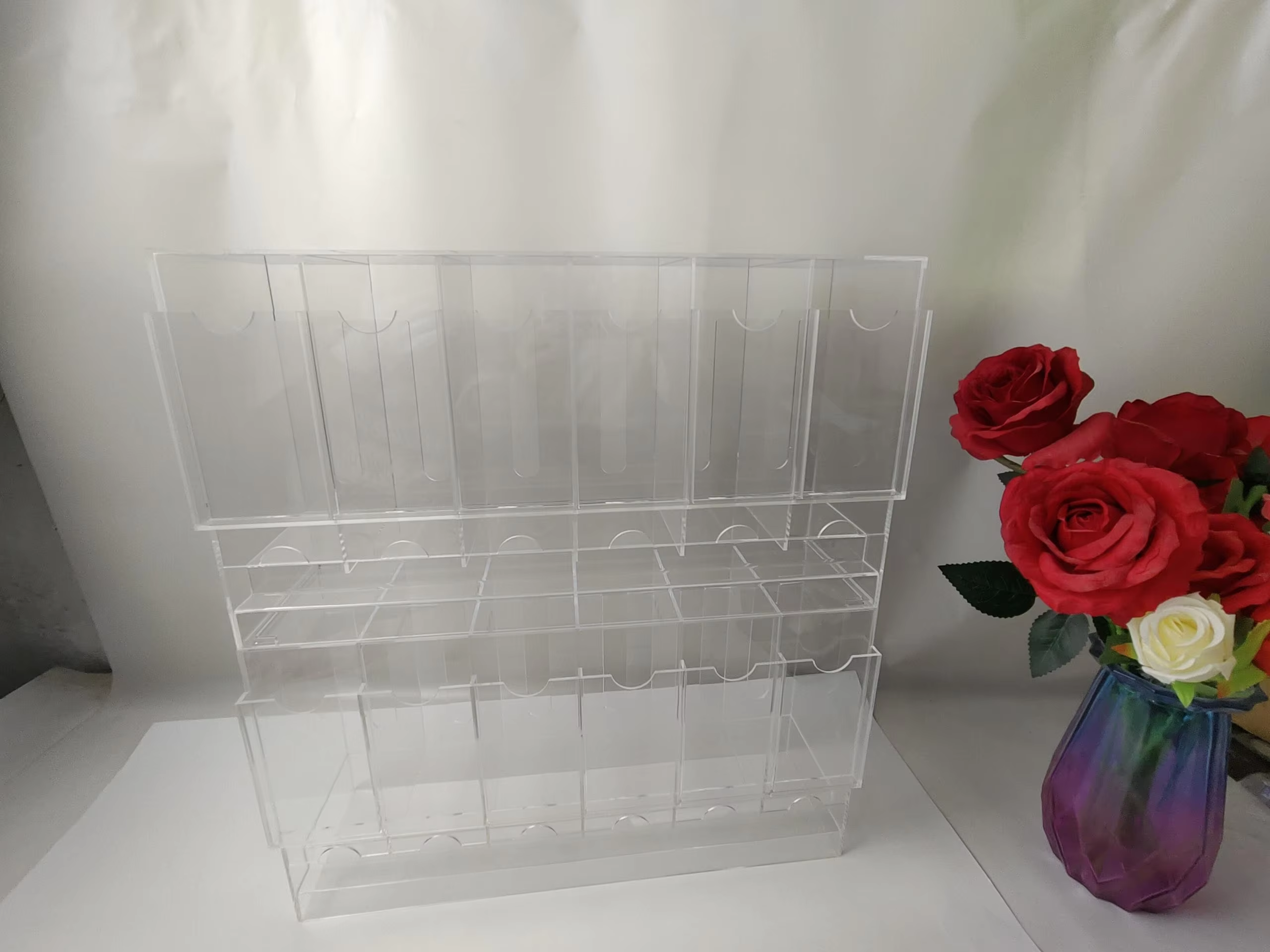
For trading card environments specifically, a six-slot configuration is a practical and popular choice. It accommodates multiple booster pack series simultaneously without overwhelming a counter or shelf. If you carry a broader product range or need to separate different card game brands, you may want to consider whether a modular or stackable design can extend capacity without requiring a completely separate unit.
Think about your peak inventory periods. During new set releases or tournament seasons, demand spikes and your acrylic dispenser needs to hold enough product to reduce restocking frequency. Sizing your dispenser to handle peak load rather than average load is a practical approach that pays off in operational efficiency.
Pack Depth and Volume Per Slot
Slot count alone does not define capacity. The depth of each slot determines how many packs can be loaded at once. A shallow slot may hold only a handful of booster packs before requiring a refill, while a deeper channel can hold a full box worth of product. For high-traffic retail environments, deeper slots reduce the frequency of staff intervention and keep the display looking full and appealing throughout the day.
When evaluating an acrylic dispenser, check whether the slot dimensions are specified by the manufacturer. Standard booster packs for popular trading card games have fairly consistent dimensions, but specialty products, oversized packs, or bundled sets may require wider or taller slot openings. Confirm compatibility before committing to a unit.
The weight distribution across loaded slots also matters. A well-engineered acrylic dispenser distributes the load evenly so that a fully stocked unit remains stable and does not tip or flex under the weight of product. This is particularly relevant for stackable designs where multiple units are placed on top of one another.
Design Factors That Define Functionality
Stackable Architecture and Vertical Expansion
One of the most valuable design features in a modern acrylic dispenser is stackability. A stackable design allows you to expand your display vertically rather than horizontally, which is critical in environments where counter space is limited. Instead of purchasing multiple standalone units and spreading them across a surface, you can build a compact vertical tower that holds significantly more product in a smaller footprint.
Stackable units should interlock securely. Loose stacking creates instability, especially when customers are pulling packs from lower tiers. Look for designs that feature positive-locking connections between stacked layers, ensuring the entire assembly stays aligned and rigid even under repeated use. A well-designed acrylic dispenser with a stacked configuration should feel like a single cohesive unit, not a precarious pile.
The stacked design also has visual merchandising advantages. A vertical tower draws the eye upward and creates a prominent display presence that a flat, single-layer unit cannot match. For retail environments where visual impact influences purchasing decisions, this is a meaningful design benefit worth factoring into your selection.
Material Thickness and Structural Integrity
Acrylic is the material of choice for these dispensers because it combines transparency, durability, and aesthetic appeal. However, not all acrylic is equal. The thickness of the acrylic panels directly affects how well the acrylic dispenser holds up under daily use, repeated loading, and the occasional bump or knock that comes with any active retail or gaming environment.
Thicker acrylic panels resist flexing and cracking far better than thin alternatives. A dispenser built from thicker stock will maintain its shape over time, keeping slots aligned and ensuring smooth pack dispensing. Thin acrylic may look identical at first glance but will show stress marks, warping, or cracking much sooner, particularly at joints and corners where structural stress concentrates.
Clarity is another material quality factor. High-grade acrylic maintains optical clarity that allows customers to see the product inside the acrylic dispenser without distortion. Lower-grade material may appear slightly cloudy or develop surface scratches quickly, diminishing the visual appeal of the display over time.
Ergonomics and User Interaction Design
Pack Dispensing Angle and Accessibility
The angle at which packs are presented to the user is a design detail that significantly affects the customer experience. An acrylic dispenser that presents packs at a natural, accessible angle allows customers to retrieve product smoothly without awkward reaching or fumbling. Poor dispensing angles lead to packs jamming, tipping, or requiring two-handed retrieval, all of which slow down transactions and create friction.
For counter-top placement, a slight forward tilt on the dispensing channel encourages packs to slide toward the opening naturally as the stack depletes. This gravity-assisted feed mechanism keeps the display functional without requiring staff to manually push product forward after every few sales. It is a small engineering detail that makes a noticeable difference in day-to-day operation.
Accessibility also matters in the context of different user heights and counter configurations. An acrylic dispenser placed at standard counter height should allow customers of varying statures to reach product comfortably. If your display is elevated on a shelf or riser, factor in the additional height when assessing whether the dispensing angle remains practical.
Labeling and Product Identification Features
In a multi-slot acrylic dispenser, customers and staff need to quickly identify which slot contains which product. Dispensers that include integrated label holders or designated label areas at the front of each slot make this identification immediate and clear. Without labeling capability, staff must rely on visual recognition of pack artwork alone, which slows service and increases the chance of customers picking the wrong product.
Label holders should be easy to update. Product lines change, new sets release, and prices shift. A dispenser design that requires tools or significant effort to swap labels creates unnecessary operational overhead. Slide-in label channels or front-facing label pockets that accept standard printed inserts are the most practical solution for active retail environments.
Clear labeling also supports self-service purchasing models where customers browse and select product independently. A well-labeled acrylic dispenser reduces the need for staff assistance, freeing up team members for other tasks while maintaining a professional, organized display appearance.
Placement Context and Environmental Fit
Counter-Top Versus Shelf Mounting Considerations
Where you intend to place your acrylic dispenser should directly influence the design you select. Counter-top units need a stable base footprint that prevents tipping without taking up excessive surface area. The base should be wide enough to provide stability when the unit is fully loaded, but compact enough to leave working space on the counter for transactions and other display items.
Shelf-mounted or wall-adjacent placements may allow for taller configurations since the surrounding environment provides additional stability context. In these settings, a stackable acrylic dispenser can be built higher without the same tipping risk that exists on an open counter. However, ensure that the combined weight of a fully stocked stacked unit does not exceed the load rating of the shelf it sits on.
Consider the viewing angle from the customer's perspective as well. A dispenser positioned at eye level on a shelf presents product differently than one sitting on a low counter. The design you choose should complement the placement height so that product is visible, accessible, and attractively presented from the customer's natural line of sight.
Compatibility with TCG and Trading Card Pack Formats
Trading card game products come in a range of pack sizes and formats. Standard booster packs, collector booster packs, and specialty sets each have slightly different dimensions. Before selecting an acrylic dispenser, measure the specific pack formats you intend to stock and confirm that the slot dimensions accommodate them without excessive looseness or a tight fit that causes jamming.
Loose-fitting slots allow packs to shift and lean, creating an untidy appearance and potentially causing packs to fall or become misaligned. Slots that are too tight make retrieval difficult and can damage pack packaging over time. The ideal fit is snug enough to keep packs upright and aligned while still allowing smooth, effortless removal by the customer.
If your product range includes both standard and oversized formats, consider whether a single acrylic dispenser can accommodate both or whether separate units optimized for each format would serve you better. Versatility is valuable, but not at the cost of a poor fit for your primary product type.
FAQ
How many slots should an acrylic dispenser have for a small retail store?
For a small retail store carrying multiple trading card game product lines, a six-slot acrylic dispenser is typically a practical starting point. It provides enough separation for different sets or brands without overwhelming limited counter space. If your range expands, a stackable design allows you to add capacity vertically rather than purchasing an entirely new unit.
Does acrylic thickness really affect the durability of a dispenser?
Yes, acrylic thickness has a direct impact on how long an acrylic dispenser holds up under regular use. Thicker panels resist flexing, cracking, and stress fractures at joints far better than thin alternatives. In a high-traffic environment where the dispenser is loaded and unloaded daily, investing in a unit built from thicker acrylic stock will result in a noticeably longer service life.
Can a stackable acrylic dispenser be used safely on a standard retail counter?
A stackable acrylic dispenser can be used safely on a standard retail counter provided the stacked configuration does not exceed a height that creates instability. Units with positive-locking connections between stacked layers are significantly more stable than those that simply rest on top of one another. Keep the total stacked height proportional to the base footprint and avoid placing the assembly near counter edges where it could be knocked over.
What is the best way to keep an acrylic dispenser looking clean and professional?
Regular wiping with a soft, lint-free cloth and a mild acrylic-safe cleaner is the most effective way to maintain the clarity and appearance of an acrylic dispenser. Avoid abrasive cloths or harsh chemical solvents, which can scratch or cloud the surface. Keeping the dispenser stocked and labels current also contributes significantly to a professional appearance that reflects well on your overall display setup.
Table of Contents
- Understanding Capacity Requirements for an Acrylic Dispenser
- Design Factors That Define Functionality
- Ergonomics and User Interaction Design
- Placement Context and Environmental Fit
-
FAQ
- How many slots should an acrylic dispenser have for a small retail store?
- Does acrylic thickness really affect the durability of a dispenser?
- Can a stackable acrylic dispenser be used safely on a standard retail counter?
- What is the best way to keep an acrylic dispenser looking clean and professional?